Get fired up for secondary heating with Oregon Heating and Repair
There’s nothing more delightful on a blustery day than curling up with a book and a warm drink in front of a roaring, toe-toasting fire. For many homes in the Rogue Valley, however, the fireplace is either too old to work properly or is collecting cobwebs while out of commission. Homes built in the late 70s and early 80s when builders were in a streamlining mindset might not have a fireplace at all.
But don’t give up on cozy nights yet! We were surprised when chatting with one of our favorite trade partners that adding a new insert or wood stove is a fairly simple install—even for homes that have no fireplace at all. And fireplaces aren’t just for the ambiance; secondary heat sources offer a backup supply of warmth at a fraction of the cost of a new heat pump or furnace system.
With all the different types of stoves out there, which secondary heat source might be right for you? We got the rundown from Eli Lease of Oregon Heating and Repair in Medford, who has over 33 years of experience in the fireplace industry.
“My dad started the installation and service department for Orley’s in Roseburg when I was 12 years old. I went to work with him and got my hands dirty,” Lease chuckles in a rich baritone. “Fireplaces, woodstoves, gas stoves, pellet stoves, gas fireplaces—that’s really my niche. I know them like the back of my hand.”
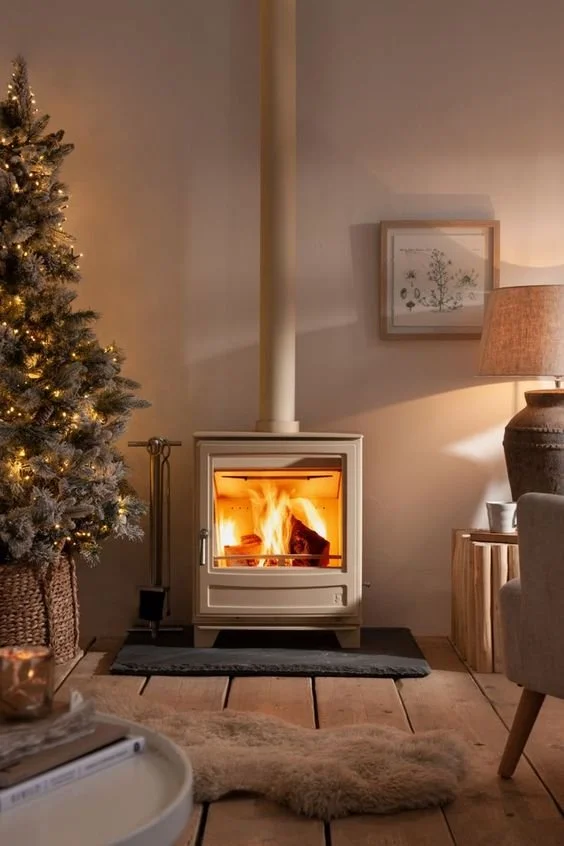
Wood Stoves: comfy, efficient, a little fussy
For coziness that permeates the whole home with that “good, dry, warm, sink-to-your-bones kind of heat,” Lease points to wood stoves.
New, emissions-conscious designs allow wood stoves to combust flammables up to three times, making wood heat more environmentally-friendly than ever. Lease points to Lopi and the Blaze King for wood burning brands leading the curve on environmental design. “They’re super efficient,” he says. “You get a 12-14 hour burn time on one load of wood.”
Wood stoves need regular cleaning to keep from flammable buildup in the flue. “The biggest drawback of a wood stove insert is finding good, dry, seasoned wood.” Lease notes that the current models of wood stoves particularly require well-seasoned wood in order to maximize efficiency.
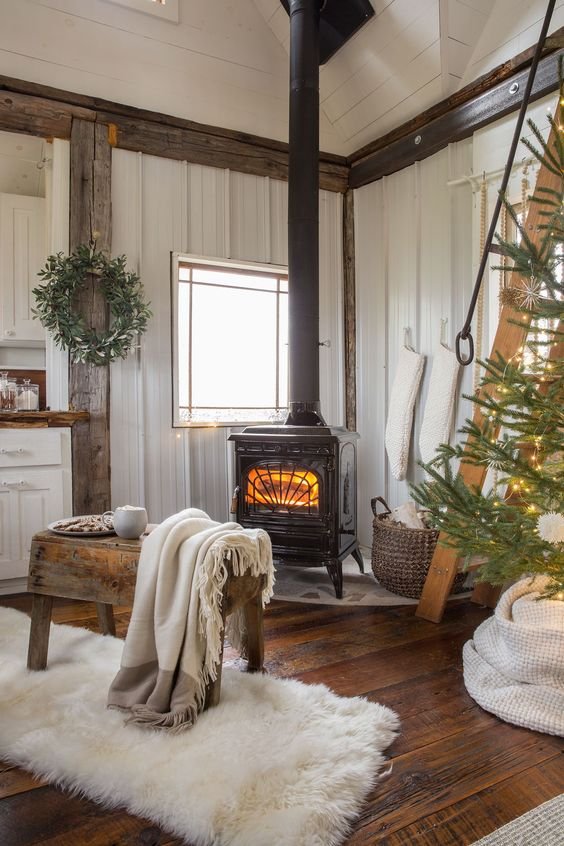
Pellet Stoves: easy, self-regulating, needs electricity
Lease points to pellet stoves as the next best thing to wood. “The drawback with a pellet stove is if you don’t have electricity, you don’t have heat.”
Lease also notes that the maintenance on a pellet stove is slightly more expensive.
On the plus side, however, fuel pellets are just a grocery trip away (bye-bye chopping wood) and the stoves are regulated by a wall thermostat, kicking on when the temperature drops. “You don’t have to worry about building a fire when it’s 30 degrees outside,” he says.
Gas stoves/inserts: easy, lower-maintenance, needs gas source
“They are super simple. You push a button: it comes on.” Remote controls add a luxurious, devil-may-care contrast to the primeval act of building a woodfire, particularly those with built-in thermostats.
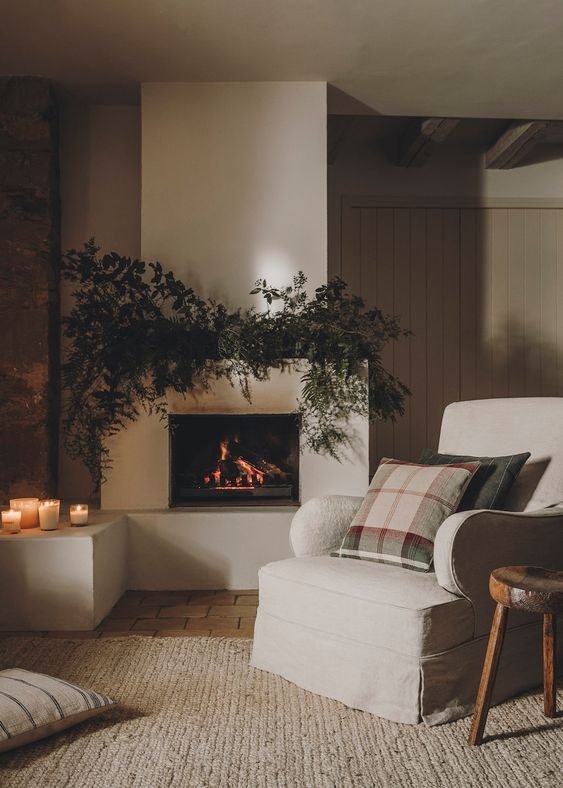
Lease says a gas inserts require minimal, yearly maintenance: mainly cleaning the interior and glass, as well as replacing the embers.
Gas stove inserts are dependent on an available natural gas source, so be sure to check with Avista to confirm there’s an accessible gas line in your house.
But will it be an invasive project?
Maybe you’ve imagined a new fireplace, but imagined the job tearing open the side of your house or yanking up flooring to build a new subfloor. To this, Lease gives an emphatic “Nope!” Most of the time, installing a freestanding stove needs little more than floor tiling and an exit hole not much bigger than a dryer vent.
Even for gas inserts, “there is no extra support needed in the floor joists. There will be some framing on the inside of the house to enclose that zero-clearance fireplace, but we do not go into the subfloor, … we’re not tearing drywall out or replacing a whole wall.”
When it comes to pairing finishes with fireplace inserts, sky’s the limit. Lease says the masonry exterior and mantle have little impact on the unit itself, its radiant heat or the retention of heat (meaning you’re free to get as wonky as you want!)
Turn up the heat
Lease finds that many of his customers end up using their stove as their primary heat source, putting their furnace or heat pump on the proverbial back burner. He says this is because clients find fireplace inserts to be more efficient. “They get that warm, cozy feeling because it’s instantaneous heat,” he says, “versus furnace heat where a lot of the kinetic energy gets lost in the ductwork.”
For anyone who’s walked into a room and felt cold, while the thermostat says it’s 75, Lease says a stove might just be their new best friend. “With a gas fireplace or woodstove, you’re not losing any of that kinetic energy, it’s coming right off the heat source and into the living space.”
Want to come check out some stoves? Eli Lease can help you find the right secondary heat source for your home, just contact Orley’s or Oregon Heating and Repair at (541) 245-0977.
For all the masonry and carpentry elements of your dream fireplace, Ashland Builders can help you get started.Click here to learn more.